Year: 2026

Year: 2026

Healing Her, Healing Earth: The Vital Link Between Girl-Child Protection and World Wildlife Day 2026

​Every year on March 3rd, the global community celebrates World Wildlife Day (WWD). In 2026, the focus is on “Medicinal and Aromatic Plants: Conserving Health, Heritage, and Livelihoods.” While this may seem like a purely environmental issue, at Protect A Girl’s Image Organization (PGIO), we know that the health of our planet is inseparable from the safety of our girls.
​You cannot protect the “Image of Nature” if the “Image of the Girl” is being shattered by violence, poverty, and a lack of opportunity.

​🌍 Why Social Advocacy is Environmental Conservation

​The connection between girl-child protection and wildlife conservation is rooted in Sustainable Development. When a girl is safe, educated, and empowered, the entire community thrives—and so does the natural world around them.

​1. Traditional Knowledge and Heritage

​In many Kenyan communities, women and girls are the primary keepers of traditional knowledge regarding medicinal plants. By protecting a girl’s right to education and safety, we ensure this vital heritage is passed down. If a girl’s future is stolen by exploitation or adolescent pregnancy, that link to our natural history is broken forever.

​2. Poverty: The Driver of Environmental Loss

​Poverty is the leading cause of both social instability and environmental degradation. When families are pushed to the brink, they often resort to unsustainable practices like illegal charcoal burning or poaching to survive.

  • ​PGIO’s Role: By providing drug prevention education and restoring the dignity of survivors, we stabilize families.
  • ​The Result: A stable home reduces the economic desperation that fuels wildlife crime.

​3. Empowerment as Stewardship

​Education is the ultimate conservation tool. A girl who stays in school learns about biodiversity and climate change. When we empower her, we aren’t just changing one life—we are raising a future leader who will advocate for her land, her water, and her wildlife.

​🛡️ Safe Spaces for Every Living Being

​World Wildlife Day advocates for “safe havens” for endangered species. Similarly, PGIO creates “safe spaces” for vulnerable children. Whether it is an endangered elephant or an at-risk young girl, the principle is the same: Every life has an inherent right to live free from violence and exploitation.

​📢 The Core Summary: Why it Matters

​Environmental conservation and social justice are two sides of the same coin.
​You cannot protect the “Image of Nature” while the “Image of the Girl” is being shattered by violence and lack of opportunity. PGIO ensures that the humans living alongside wildlife are healthy, empowered, and safe. When a girl is empowered, she doesn’t just change her own life—she becomes the most effective defender of the natural world around her. Protecting her is protecting the planet.

​🤝 Join the Movement this #WWD2026

​This World Wildlife Day, we invite you to look at conservation through a human lens. Support our mission to restore dignity and provide a future for girls in Kenya.

  • ​Donate: Help us fund counseling and digital literacy for survivors.
  • Volunteer: Lend your voice to our anti-rape advocacy.
  • ​Share: Spread the word that protecting her is protecting our earth.

Resilient Tourism, Radiant Futures: Safeguarding the Image of the Rural Girl

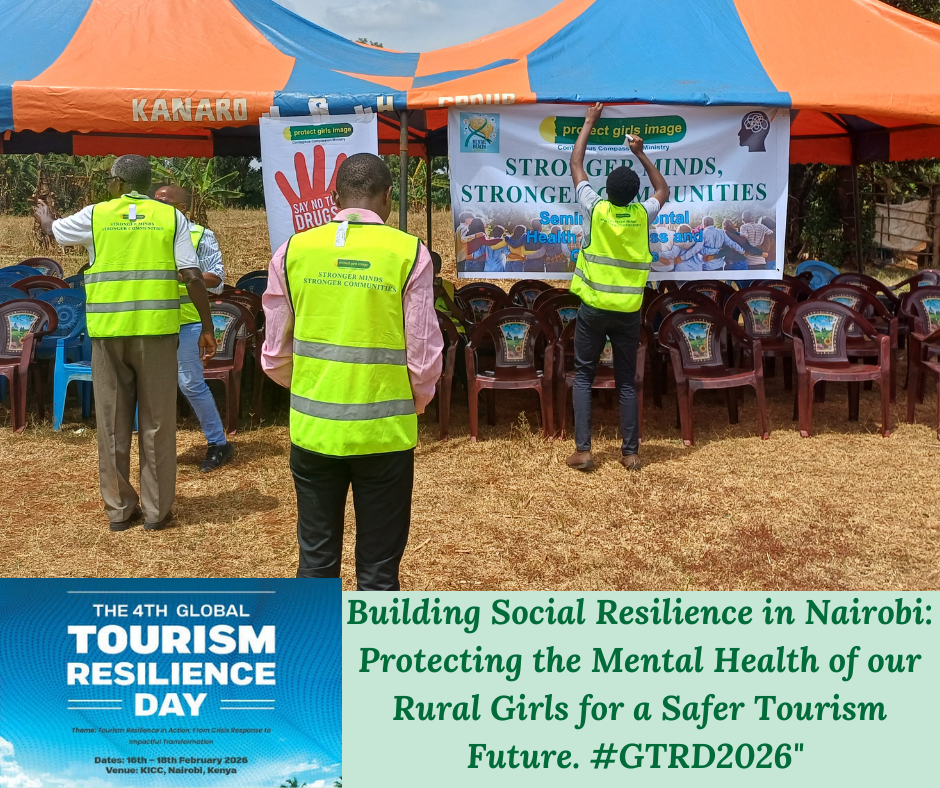
As Nairobi hosts the historic 4th Global Tourism Resilience Day Conference at the KICC this week, the world’s eyes are on Kenya. The 2026 theme, “From Crisis Response to Impactful Transformation,” challenges us to look beyond economic recovery. At Protect Girl Image Organization (PGIO), we believe true transformation happens when a community’s most vulnerable—our young girls—are shielded from the “insidious pressures” that often accompany rapid tourism growth, such as drug abuse and exploitation.
​While tourism can stimulate rural development, it can also introduce risks like increased drug availability and social disorders. To tackle this, PGIO is proud to conduct a pro-bono mental health and anti-drug seminar tailored specifically for our rural communities.

​Understanding the Challenge: Mental Health & Substance Use

​In rural Kenya, drug abuse—specifically substances like alcohol, tobacco, khat, and cannabis—often acts as a gateway to deeper psychological crises. Research shows that nearly 1 in 4 people seeking healthcare in Kenya suffer from a mental health condition, yet many go undiagnosed due to severe shortages of professionals in remote areas.
​Our seminar aims to Increase Understanding by breaking down complex topics into simple terms:

  • ​What is Mental Health? Defining it simply as our emotional and social well-being.
  • ​The Difference: Clarifying the line between daily mental health and clinical mental illness.
  • ​The Impact: How these issues affect school performance, family relationships, and a girl’s future.

​The Silent Warning Signs

​Drugs don’t just affect the body; they alter the brain. Regular use can cause “physiological dependence,” where stopping leads to intense cravings and withdrawal. We teach parents and peers to notice early behavioral shifts:

  • Emotional Signs: Feeling overwhelmed, irritability, or losing interest in hobbies.
  • ​Behavioral Signs: Drastic changes in sleep, appetite, or motivation.
  • ​Physical Toll: Accelerated heartbeat and long-term damage to the brain and body.

​Bridging the Gap: Accessing Care in Rural Areas

​Accessing care remains a major hurdle in rural Kenya due to distance and the high cost of private services. PGIO’s seminar provides a roadmap to Appropriate, Safe Support:

  • ​Task-Sharing: We advocate for using Community Health Workers (CHWs) and trusted local leaders who can detect and respond to issues early.
  • ​Safe Spaces: Encouraging empathy and kindness to reduce the stigma that often keeps families in hiding.
  • ​Local Language: Because “English will not fit well in this community,” all our sessions are conducted in Swahili and Kikuyu to ensure the message is truly felt and understood.

​Join the Transformation

​Resilience is more than just “bouncing back”—it is about moving forward with a stronger, safer foundation for our children. By anchoring a girl’s identity in mental wellness and a drug-free life, we ensure her image remains unshakeable.

The Silent Curriculum: Protecting Our Girls’ Identity in a Digital East Africa

In the quiet villages of Central Kenya, the bustling streets of Nairobi, the rolling hills of Machakos, and the coastal breeze of Mombasa, a transformation is happening. It isn’t just in our infrastructure—it’s in the hearts and minds of our daughters.

​As parents and mentors in East Africa, we often feel we are in a race against time. We aren’t just competing with school syllabi; we are competing with a globalized digital culture that reaches into the furthest rural corners of our nation. Every day, through 7+ hours of screen time, social media trends, and peer influence, our girls are absorbing ideas about beauty, worth, and “success” that often contradict the values of dignity and faith we hold dear.

​At Protect Girl Image Organization, we see the “painful gap.” We see brilliant young girls who can navigate a smartphone with ease but struggle to navigate their own self-worth. We see peer pressure outweighing ancestral and spiritual principles. This is why our mission goes beyond charity; it is about reclaiming the narrative of the African girl.

​How We Bridge the Gap: A Strategy of Compassion and Knowledge

​Our work in marginalized and underserved communities is driven by data, research, and a deep-seated care for the “forgotten” girl. Here is how we—together with our donors and volunteers—are changing the environment:

​1. Anchoring Identity in the Formative Years

​Resilience is built early. In areas where traditional support systems are fraying, we step in to provide mentorship that anchors a girl’s identity. We believe that if a girl knows who she is and whose she is before the world tells her otherwise, she becomes unshakeable. Whether in Nairobi or the remote parts of Machakos, we provide the “foundation” that allows her to face social pressure with confidence and clarity.

​2. Education for Wisdom, Not Just Grades

​Much like rote memorization without understanding, education without moral application is hollow. We advocate for a learning approach where girls don’t just “pass exams” but understand how their values apply to real-life challenges—relationships, boundaries, and leadership. We want our beneficiaries to see their faith and ethics as a practical compass, not a distant ritual.

​3. Equipping the Village (Parents and Mentors)

​The landscape of adolescence has changed. Parents in Central Kenya are facing challenges their grandparents never imagined—online grooming, digital bullying, and identity crises. Protect Girl Image Organization acts as a bridge, educating parents and guardians on how to communicate with teens without pushing them away. We empower them to have the “tough conversations” calmly and confidently.

​4. Purposeful Digital Inclusion

​We cannot hide from the digital age, but we can master it. In our outreach, we promote “Meaningful Digital Learning.” Instead of mindless scrolling that erodes self-esteem, we guide our girls toward digital spaces that reinforce their identity, teach them skills, and uplift their spirits. We turn the screen from a source of insecurity into a tool for empowerment.

​Why Your Support Matters

​When you donate or volunteer with us, you aren’t just funding a program; you are competing against the negative influences that seek to diminish our girls. Your contributions allow us to reach the “undeserved”—those girls in rural areas who are often overlooked because of their location.

​Our vision is to expand beyond our current reach, ensuring that no girl, regardless of her postcode, is left to be “taught” by a screen alone.

​Our acts of compassion are not random; they are intentional, researched, and fueled by the belief that every girl deserves to see a reflection of strength and dignity when she looks in the mirror.

  1. ​Join the Movement

​We are more than an organization; we are a shield. We invite you to be part of this vital work. Whether you are in the diaspora or right here at home, your support ensures that the “forgotten” girls of East Africa are remembered, protected, and empowered.