Cases & Updates

From the Streets to the Stars: The Heart-Wrenching Journey of Alex’s Second Chance

​Imagine being fourteen years old and having no door to lock at night.
​While most teenagers are worrying about homework or social media, Alex was standing in the dark, wondering which neighbor’s floor might be available for him to sleep on. Not because he was rebellious, and not because he didn’t have parents—but because poverty and addiction had stripped him of a place to call home.

​A “Home” That Wasn’t a Haven

​Alex’s reality was a single, cramped room shared by his mother, his stepfather, and his younger sister. But for Alex, there was no space for a bed, let alone a future.
​The story takes a darker turn. Both of his parents struggled with substance abuse, with his stepfather’s addiction often fueling violent outbursts. For Alex, entering that single room didn’t just mean overcrowding; it meant risking his safety. He was a boy caught between the love for his mother and the terror of a stepfather who didn’t want him there.

​”I didn’t just need a school; I needed to know I wouldn’t be chased away when the sun went down.” — Alex

​The Weight of a Man on a Child’s Shoulders

​While his peers were enrolling in high school, Alex was in the fields. To survive, he took on grueling manual labor and odd jobs. But the meager coins he earned never stayed in his pocket:

  • ​Survival: He had to pay “thank you” tokens to well-wishers just to have a roof over his head for the night.
  • ​Sacrifice: Despite their addiction, Alex’s heart remained with his mother and sister. He often handed over his hard-earned money to cover medical fees for his little sibling.
  • ​Solitude: He was fending for himself in a world that seemed to have forgotten he was still just a child.

​School wasn’t a dream anymore; it was a luxury he couldn’t afford.

​When PGIO Stepped In: A New Chapter at Kangai Secondary

​At Protect Girl Image Organization (PGIO), our mission is to safeguard the vulnerable and build the next generation, regardless of the odds stacked against them. When we heard Alex’s story, we knew we couldn’t let his light be extinguished by the shadows of addiction and poverty.
​We didn’t just offer him a desk; we offered him a home.
​We took Alex into our Rescue Home, providing the stability, safety, and nutrition he had been denied for years. We enrolled him at Kangai Secondary School, and the transformation has been nothing short of miraculous.

​Where is Alex Now?

  • Current Status: Form 2 student at Kangai Secondary.
  • ​Duration: 2 years of consistent, supported education.
  • ​Performance: Showing incredible resilience and academic hard work.
  • ​Support: PGIO continues to cater for 100% of his tuition and boarding needs.

​Building the Next Generation

​Alex is no longer the boy begging for a place to sleep. He is a young man with a vision, a student with a future, and a testament to what happens when we refuse to look away.
​At PGIO, we couldn’t be prouder of his progress. Seeing him thrive in Form 2 is a reminder that while we cannot change a child’s past, we can absolutely rewrite their future.
​Congratulations, Alex! Your resilience inspires us every day. Keep reaching for the stars—we’ll be right here to make sure you have the wings to get there.

​🧡 Join the Mission

​Stories like Alex’s are only possible through collective support. Together, we are changing lives, one rescue at a time.
​#PGIO #TransformingLives #AlexsStory #EducationForAll #ProtectGirlImageOrganization #SuccessStories #EndPoverty

Healing Her, Healing Earth: The Vital Link Between Girl-Child Protection and World Wildlife Day 2026

​Every year on March 3rd, the global community celebrates World Wildlife Day (WWD). In 2026, the focus is on “Medicinal and Aromatic Plants: Conserving Health, Heritage, and Livelihoods.” While this may seem like a purely environmental issue, at Protect A Girl’s Image Organization (PGIO), we know that the health of our planet is inseparable from the safety of our girls.
​You cannot protect the “Image of Nature” if the “Image of the Girl” is being shattered by violence, poverty, and a lack of opportunity.

​🌍 Why Social Advocacy is Environmental Conservation

​The connection between girl-child protection and wildlife conservation is rooted in Sustainable Development. When a girl is safe, educated, and empowered, the entire community thrives—and so does the natural world around them.

​1. Traditional Knowledge and Heritage

​In many Kenyan communities, women and girls are the primary keepers of traditional knowledge regarding medicinal plants. By protecting a girl’s right to education and safety, we ensure this vital heritage is passed down. If a girl’s future is stolen by exploitation or adolescent pregnancy, that link to our natural history is broken forever.

​2. Poverty: The Driver of Environmental Loss

​Poverty is the leading cause of both social instability and environmental degradation. When families are pushed to the brink, they often resort to unsustainable practices like illegal charcoal burning or poaching to survive.

  • ​PGIO’s Role: By providing drug prevention education and restoring the dignity of survivors, we stabilize families.
  • ​The Result: A stable home reduces the economic desperation that fuels wildlife crime.

​3. Empowerment as Stewardship

​Education is the ultimate conservation tool. A girl who stays in school learns about biodiversity and climate change. When we empower her, we aren’t just changing one life—we are raising a future leader who will advocate for her land, her water, and her wildlife.

​🛡️ Safe Spaces for Every Living Being

​World Wildlife Day advocates for “safe havens” for endangered species. Similarly, PGIO creates “safe spaces” for vulnerable children. Whether it is an endangered elephant or an at-risk young girl, the principle is the same: Every life has an inherent right to live free from violence and exploitation.

​📢 The Core Summary: Why it Matters

​Environmental conservation and social justice are two sides of the same coin.
​You cannot protect the “Image of Nature” while the “Image of the Girl” is being shattered by violence and lack of opportunity. PGIO ensures that the humans living alongside wildlife are healthy, empowered, and safe. When a girl is empowered, she doesn’t just change her own life—she becomes the most effective defender of the natural world around her. Protecting her is protecting the planet.

​🤝 Join the Movement this #WWD2026

​This World Wildlife Day, we invite you to look at conservation through a human lens. Support our mission to restore dignity and provide a future for girls in Kenya.

  • ​Donate: Help us fund counseling and digital literacy for survivors.
  • Volunteer: Lend your voice to our anti-rape advocacy.
  • ​Share: Spread the word that protecting her is protecting our earth.

Resilient Tourism, Radiant Futures: Safeguarding the Image of the Rural Girl

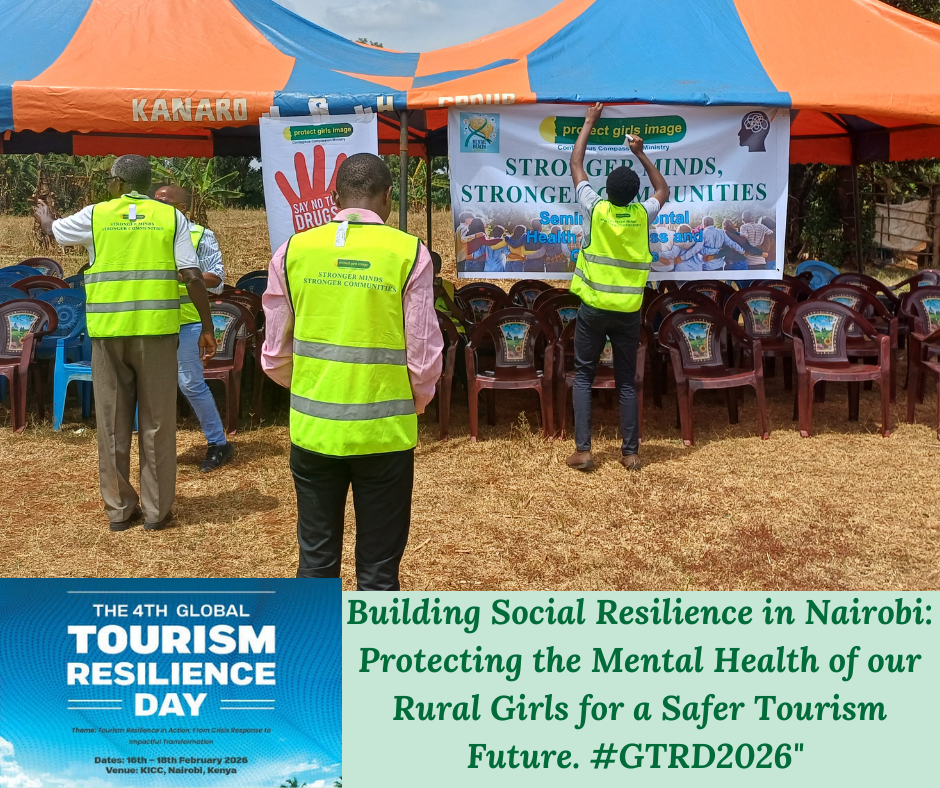
As Nairobi hosts the historic 4th Global Tourism Resilience Day Conference at the KICC this week, the world’s eyes are on Kenya. The 2026 theme, “From Crisis Response to Impactful Transformation,” challenges us to look beyond economic recovery. At Protect Girl Image Organization (PGIO), we believe true transformation happens when a community’s most vulnerable—our young girls—are shielded from the “insidious pressures” that often accompany rapid tourism growth, such as drug abuse and exploitation.
​While tourism can stimulate rural development, it can also introduce risks like increased drug availability and social disorders. To tackle this, PGIO is proud to conduct a pro-bono mental health and anti-drug seminar tailored specifically for our rural communities.

​Understanding the Challenge: Mental Health & Substance Use

​In rural Kenya, drug abuse—specifically substances like alcohol, tobacco, khat, and cannabis—often acts as a gateway to deeper psychological crises. Research shows that nearly 1 in 4 people seeking healthcare in Kenya suffer from a mental health condition, yet many go undiagnosed due to severe shortages of professionals in remote areas.
​Our seminar aims to Increase Understanding by breaking down complex topics into simple terms:

  • ​What is Mental Health? Defining it simply as our emotional and social well-being.
  • ​The Difference: Clarifying the line between daily mental health and clinical mental illness.
  • ​The Impact: How these issues affect school performance, family relationships, and a girl’s future.

​The Silent Warning Signs

​Drugs don’t just affect the body; they alter the brain. Regular use can cause “physiological dependence,” where stopping leads to intense cravings and withdrawal. We teach parents and peers to notice early behavioral shifts:

  • Emotional Signs: Feeling overwhelmed, irritability, or losing interest in hobbies.
  • ​Behavioral Signs: Drastic changes in sleep, appetite, or motivation.
  • ​Physical Toll: Accelerated heartbeat and long-term damage to the brain and body.

​Bridging the Gap: Accessing Care in Rural Areas

​Accessing care remains a major hurdle in rural Kenya due to distance and the high cost of private services. PGIO’s seminar provides a roadmap to Appropriate, Safe Support:

  • ​Task-Sharing: We advocate for using Community Health Workers (CHWs) and trusted local leaders who can detect and respond to issues early.
  • ​Safe Spaces: Encouraging empathy and kindness to reduce the stigma that often keeps families in hiding.
  • ​Local Language: Because “English will not fit well in this community,” all our sessions are conducted in Swahili and Kikuyu to ensure the message is truly felt and understood.

​Join the Transformation

​Resilience is more than just “bouncing back”—it is about moving forward with a stronger, safer foundation for our children. By anchoring a girl’s identity in mental wellness and a drug-free life, we ensure her image remains unshakeable.

The Silent Curriculum: Protecting Our Girls’ Identity in a Digital East Africa

In the quiet villages of Central Kenya, the bustling streets of Nairobi, the rolling hills of Machakos, and the coastal breeze of Mombasa, a transformation is happening. It isn’t just in our infrastructure—it’s in the hearts and minds of our daughters.

​As parents and mentors in East Africa, we often feel we are in a race against time. We aren’t just competing with school syllabi; we are competing with a globalized digital culture that reaches into the furthest rural corners of our nation. Every day, through 7+ hours of screen time, social media trends, and peer influence, our girls are absorbing ideas about beauty, worth, and “success” that often contradict the values of dignity and faith we hold dear.

​At Protect Girl Image Organization, we see the “painful gap.” We see brilliant young girls who can navigate a smartphone with ease but struggle to navigate their own self-worth. We see peer pressure outweighing ancestral and spiritual principles. This is why our mission goes beyond charity; it is about reclaiming the narrative of the African girl.

​How We Bridge the Gap: A Strategy of Compassion and Knowledge

​Our work in marginalized and underserved communities is driven by data, research, and a deep-seated care for the “forgotten” girl. Here is how we—together with our donors and volunteers—are changing the environment:

​1. Anchoring Identity in the Formative Years

​Resilience is built early. In areas where traditional support systems are fraying, we step in to provide mentorship that anchors a girl’s identity. We believe that if a girl knows who she is and whose she is before the world tells her otherwise, she becomes unshakeable. Whether in Nairobi or the remote parts of Machakos, we provide the “foundation” that allows her to face social pressure with confidence and clarity.

​2. Education for Wisdom, Not Just Grades

​Much like rote memorization without understanding, education without moral application is hollow. We advocate for a learning approach where girls don’t just “pass exams” but understand how their values apply to real-life challenges—relationships, boundaries, and leadership. We want our beneficiaries to see their faith and ethics as a practical compass, not a distant ritual.

​3. Equipping the Village (Parents and Mentors)

​The landscape of adolescence has changed. Parents in Central Kenya are facing challenges their grandparents never imagined—online grooming, digital bullying, and identity crises. Protect Girl Image Organization acts as a bridge, educating parents and guardians on how to communicate with teens without pushing them away. We empower them to have the “tough conversations” calmly and confidently.

​4. Purposeful Digital Inclusion

​We cannot hide from the digital age, but we can master it. In our outreach, we promote “Meaningful Digital Learning.” Instead of mindless scrolling that erodes self-esteem, we guide our girls toward digital spaces that reinforce their identity, teach them skills, and uplift their spirits. We turn the screen from a source of insecurity into a tool for empowerment.

​Why Your Support Matters

​When you donate or volunteer with us, you aren’t just funding a program; you are competing against the negative influences that seek to diminish our girls. Your contributions allow us to reach the “undeserved”—those girls in rural areas who are often overlooked because of their location.

​Our vision is to expand beyond our current reach, ensuring that no girl, regardless of her postcode, is left to be “taught” by a screen alone.

​Our acts of compassion are not random; they are intentional, researched, and fueled by the belief that every girl deserves to see a reflection of strength and dignity when she looks in the mirror.

  1. ​Join the Movement

​We are more than an organization; we are a shield. We invite you to be part of this vital work. Whether you are in the diaspora or right here at home, your support ensures that the “forgotten” girls of East Africa are remembered, protected, and empowered.

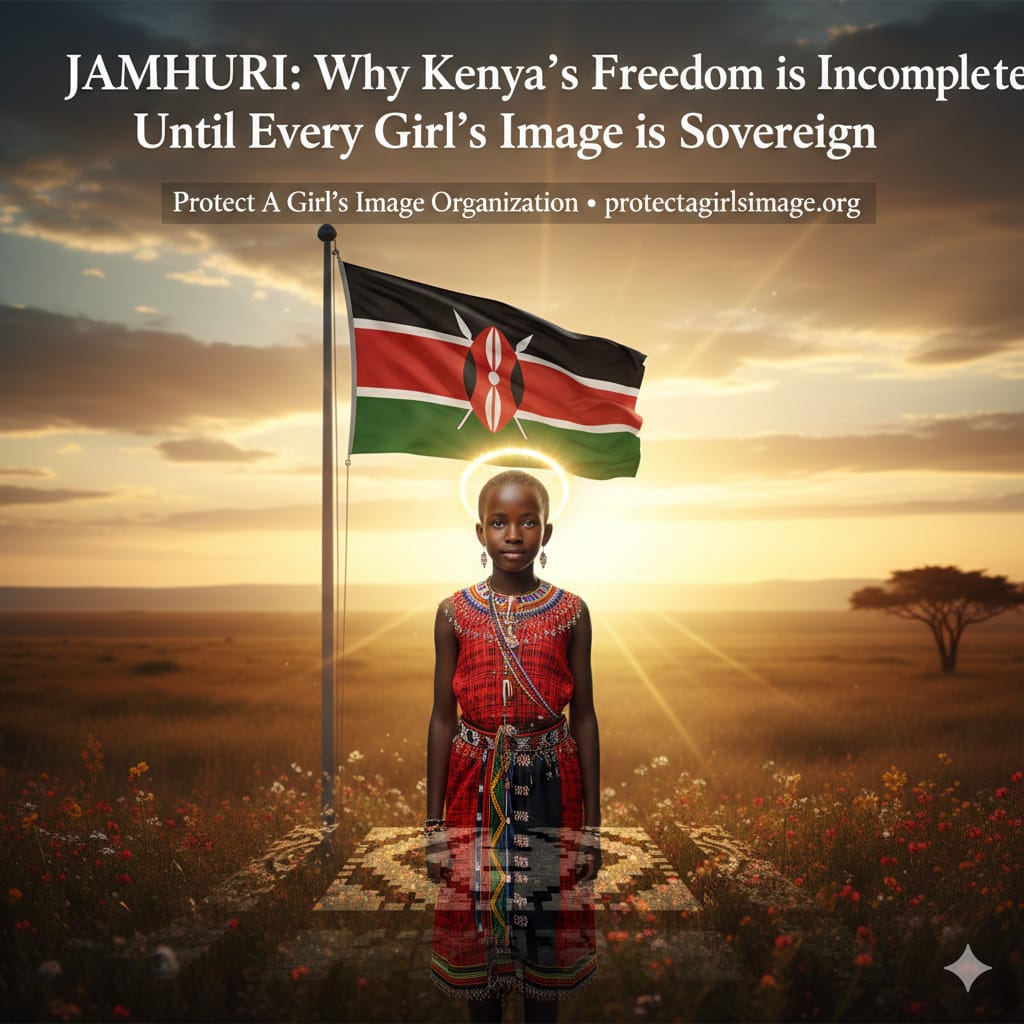
JAMHURI: Why Kenya’s Freedom is Incomplete Until Every Girl’s Image is Sovereign.

The crisp air of December 12th rolls in, carrying with it the undeniable scent of history, pride, and the deep, resonant rhythm of our national soul. It is Jamhuri Day—the day we celebrate the birth of our Republic. A day when we finally claimed the right to determine our own identity, to hold our heads high, and to define the image of Kenya for the world and for ourselves.
​We stood on the precipice of a new dawn, having fought for the most fundamental freedom: Sovereignty.
​But as we celebrate the freedom of our nation, we must pause and ask a more profound, personal question that speaks directly to the core of the Kenyan spirit: Is our freedom truly complete until every single Kenyan daughter is sovereign over her own image?

The Parallel Struggle for Dignity

​At Protect A Girl’s Image Organization (PGIO), we see Jamhuri Day not just as a historical milestone, but as a mandate.
​The freedom fighters struggled fiercely to restore the dignity of a nation. They fought against a system that sought to diminish Kenya’s image, control its resources, and dictate its future. They knew that true freedom meant the power of self-definition.
​This is the very essence of the PGIO mission, only applied to the individual.
PGIO stands for the belief that a girl’s image, her self-worth, her honor, and her potential are non-negotiable national assets. We fight the modern-day battle against forces that attempt to steal a girl’s narrative—whether it’s the insidious pressure of social media, the harsh judgment of community stigma, or the devastating impact of exploitation and abuse.
​A truly Jamhuri Kenya—a self-governed, free Republic—cannot exist where its daughters are not free:

  • ​Free to pursue education without fear.
  • ​Free to define their worth by their character, not their appearance or circumstances.
  • ​Free to dream without the weight of diminished expectations or the burden of a tarnished reputation.

From National Flag to Personal Shield

When our flag was raised for the first time, it wasn’t just a piece of cloth—it was a shield of sovereignty. It declared: “We are in control of our own destiny.”

Today, we call on every parent, teacher, leader, and fellow citizen to help us raise a personal shield for the girls in our communities. This shield is the protection of her image, the unwavering affirmation of her value, and the security of her future.

​Jamhuri Day is about honoring the past by securing the future. We honor the heroes who fought for a free nation by becoming the heroes who fight for free individuals within that nation.

​The strength of a Republic is measured not just by its GDP or infrastructure, but by the dignity of its most vulnerable citizens.
​For us, Jamhuri Day is the commitment to ensure that every Kenyan girl grows up knowing this absolute truth: Her dignity is not a gift: It is a birthright, secured by the very spirit of our Republic.

​Let us all pledge this Jamhuri Day to protect the image and future of our girls. Because when a Kenyan girl is sovereign over her own life, when her self-worth is protected, and when she is free to fulfill her immense potential, that is when Kenya’s independence will truly be complete.

Happy Jamhuri Day! Let Freedom Ring for Every Daughter of the Republic.

Support PGIO’s mission to empower and protect the self-worth of Kenyan girls. Visit our website to learn how you can contribute to true freedom.

Unbreakable Dignity: A Pledge for Freedom and Potential


​On December 2nd and 3rd, the world marked two deeply important days: the International Day for the Abolition of Slavery and the International Day of Persons with Disabilities.
​At PGIO, we see more than just dates. We see an interconnected, essential fight for human dignity. Our core message is a clear demand: Every person deserves absolute freedom and the unimpeded right to realize their full, magnificent potential.

​The Power of Disability Inclusion

​We are addressing the millions living with disabilities, and the tireless caregivers who support them. Your journey is defined by unyielding strength as you navigate systemic barriers.

​Why Inclusion is Vital

​True inclusion is not about charity or tolerance. It is about recognizing the inherent worth of every person.

  • ​You are Valued: Your voice, perspective, and contributions are essential components of a truly thriving society.
  • ​Barriers Must Fall: We are dedicated to dismantling all barriers—physical, technological, and attitudinal—that limit potential.

​We stand with you in demanding genuine, widespread disability inclusion. Your resilience should be celebrated as a foundation for a better, more accessible world.

​Freedom: A Fight Against Modern Slavery

​The abolition of slavery is often considered history. Tragically, it is a global issue today. An estimated 50 million people are currently trapped in modern slavery, human trafficking, and forced labor.

​Beyond the Chains

​The fight for freedom must extend beyond physical bondage. We must confront the “softer” forms of servitude that erode human dignity:

  • ​Economic Exploitation: Systems that deny fair wages and safe conditions, forcing people to choose survival over basic rights.
  • ​Systemic Oppression: Cycles of inequity and poverty that severely limit choice and opportunity.

​When PGIO speaks of abolition, we mean dismantling all systems—physical, economic, and systemic—that prevent people from living lives of self-determination and freedom.

​Our Unbreakable Pledge

​The memory of December 2nd and 3rd must be a permanent catalyst for change, not a fleeting reflection.

PGIO’s Commitment to Human Dignity

​At PGIO, we pledge to uphold the values of these monumental days:

  1. ​Demand Dignity: We stand unequivocally against all forms of exploitation and modern slavery.
  2. ​Champion Inclusion: We integrate accessibility and diversity as core values in every pgio initiative.
  3. Build Better Systems: We advocate for social and economic structures that support freedom and potential for everyone.

​You are valued. You deserve to be free. And your potential is limitless.

Share your thoughts: How do you define freedom and inclusion in your community?

World Children’s Day 2025: Reimagining a Future Where Every Child Thrives

​Every child carries a universe within them—hope, curiosity, possibility, and a light powerful enough to brighten entire communities. On this World Children’s Day, we pause not just to celebrate, but to confront the realities that dim children’s potential and to reaffirm our commitment to creating a world where every child is safe, empowered, and free to dream.
​At Protect A Girl’s Image Organization (PGIO), this day is more than a date on the calendar. It is a daily reminder of why we exist, why we fight, and why we show up for the most vulnerable.

​The Fragile Rights: Why World Children’s Day Matters

​World Children’s Day is a global call to action for child rights. It asks us to listen to the voices of children and to be accountable for the world we hand over to them. But for thousands of children across Kenya, these rights remain fragile:

  • ​Many still face sexual violence, exploitation, and early pregnancies, robbing them of childhood and opportunity.
  • ​Others grow up amid substance-abuse-ravaged homes, carrying emotional burdens too heavy for their young shoulders.
  • ​Far too many lack access to basic needs: education, counselling, protection, and safe spaces.

​This is not the world they deserve.

​PGIO’s Commitment: Protecting Childhood, Restoring Dignity

​For years, PGIO has stood in the gap—advocating, rescuing, empowering, and walking with children and families through their darkest moments. We exist to strengthen families and ensure children thrive.
​Our core areas of work include:

  • ​Substance Use Disorder Prevention: Breaking the cycle of addiction through counselling, awareness, and spiritual support for at-risk families.
  • ​Protection Against Early Adolescent Pregnancies: Empowering girls with knowledge, self-worth, and confidence through school programs and mentorship.
  • ​Advocacy for Sexual Violence Survivors: Standing on the frontlines to ensure survivors receive justice, emotional support, and pathways back to healing.
  • ​Empowering Families Through Economic Support: Offering zero-interest loans, skills training, and community support systems to end poverty.
  • ​Education & Skill-Building Through Our Polytechnic: Giving youth practical skills, job opportunities, and a fresh start toward self-reliance.

​This Year’s Theme: Listen. Protect. Empower.

​This World Children’s Day, we join the world in committing to three powerful actions:

  • ​Listen: Children have voices, opinions, dreams, and fears. We must make room for their stories, their feelings, and their hopes.
  • ​Protect: Protection means creating environments—at home, in school, online, and in our communities—where children are safe and cared for.
  • ​Empower: Empowerment means giving children not just what they need to survive, but what they need to succeed, ensuring every child has equal opportunities to grow mentally, emotionally, spiritually, and socially.

​A Call to Action for the Community

​Our mission is big, but together, we are bigger.
​As we mark this day, we invite parents, teachers, community leaders, and every Kenyan of goodwill to join us in:

  • ​Mentoring a child in your neighborhood.
  • ​Reporting cases of abuse to the proper authorities.
  • ​Supporting our grief and counselling sessions through donation or volunteering.
  • ​Partnering with PGIO programs.
  • ​Creating safe, healthy environments for the children around them.

​Because children are not just the future—they are the present, shaping who we are and who we become.

​At PGIO, every day is World Children’s Day. And today, we recommit to ensuring that every child we reach is seen, heard, valued, and protected.
​Let’s build a world where all children can rise.

Beyond the Lab: How PGIO Uses Applied Sciences to End Cycles of Vulnerability and Empower Girls

Science is more than formulas and white coats; it is compassion distilled into action. At Protect a Girl’s Image Organization (PGIO), we believe the deepest healing happens when empathy is backed by evidence. As we mark the International Week of Science, we pause to celebrate this truth: science is the silent, essential engine transforming lives, from a healed mind to a sustainable livelihood.

For PGIO, science is not an abstract concept. It is a living force behind every success story. From understanding how trauma rewires the brain to utilizing environmental science for sustainable livelihoods, PGIO bridges knowledge and humanity every single day.

​🧠 1. Neuroscience: Rewiring Trauma and Addiction

​Addiction and trauma often feel invisible, but neuroscience gives us the language to understand them. We know how stress, loss, and pain physically affect the brain—and how intentional recovery can foster powerful rewiring.
​At PGIO, this specialized knowledge fuels our rehabilitation and mental health programs. We approach individual healing with both empathy and evidence, providing our teams with the tools to heal and guide, grounded in science.

​🫀 2. Public Health: Building Resilience from the Ground Up

​A healthy mind requires a healthy environment. That’s why PGIO integrates foundational public health science into our community education programs, teaching families about nutrition, hygiene, and disease prevention.
​When a mother understands how clean water or balanced meals prevent illness, science has already done its most sacred work: protecting lives through informed awareness.

​👧🏽 3. Reproductive Health: Education as the Ultimate Protection

​We firmly believe that education is the most powerful form of protection.
​By teaching adolescents the science behind their bodies and reproductive health, we empower girls to make informed, confident decisions about their future. This knowledge reduces early pregnancies, prevents exploitation, and effectively breaks generational cycles of vulnerability—proof that applied science has the power to change destinies.

​🌱 4. Environmental Science: Sustaining People and Planet

​Science is also the bedrock of our eco-empowerment initiatives.
​Through training in sustainable farming practices, clean energy awareness, and skills development at PGIO’s polytechnic, we help families create livelihoods that protect both people and the planet. When communities embrace the science of sustainability, empowerment seamlessly transforms into self-reliance.

​⚙️ 5. Education and Innovation: Where Knowledge Meets Opportunity

​Science doesn’t only exist in textbooks—it thrives in practical skill, creativity, and innovation.
​Our polytechnic programs equip youth with technical knowledge, actively transforming curiosity into marketable careers. From electrical repair to environmental design, every skill taught is science in action, building futures, one learner at a time.

​💫 Our Ongoing Promise: Science for a Humane World

​This International Week of Science, we celebrate the power of knowledge not just to inform, but to profoundly heal.
​At PGIO, science is more than study—it is the essential bridge between awareness and action, compassion and change. We are committed to fostering thriving communities where science walks hand-in-hand with empathy.

How Much Would You Pay to Sexually Assault an Animal?

In a small village called Kareng Pangi, deep within Central Kalimantan, Borneo, a young female Orangutan named Pony endured unimaginable horror. She was chained to a filthy mattress in a makeshift brothel, her body shaved, her spirit broken, and her innocence stolen. What happened to Pony is one of the most disturbing and heartbreaking cases of animal sexual abuse ever documented.

Pony’s nightmare began when poachers murdered her mother. An all-too-common method used to capture baby Orangutans from the wild. The terrified infant was then sold illegally to a brothel, where her captors subjected her to sexual slavery. Every few days, they shaved her entire body, bathed and perfumed her, and applied makeup to make her appear more human. Then, they chained her to a bed and forced her to perform sexual acts with men who paid between two and three dollars per encounter (same price charged for a human sex worker).

The men who abused her were clearly not driven by desperation or poverty; they sought her out because she was helpless. Because she could not resist. Because cruelty gave them power.

When the Borneo Orangutan Survival Foundation (BOS) learned about Pony, they joined forces with local authorities to plan her rescue but those that benefitted from Pony’s suffering refused to let her go. They fought to keep her. It took over a year of negotiations and preparation before authorities could safely move in. In 2003, a team of 35 armed police officers carrying AK-47s entered the village and freed her.

What they found was devastating. Pony was terrified of humans, her skin completely bare and covered in sores from years of shaving and infection. Whenever a man approached, she automatically assumed a submissive position; a conditioned response from repeated sexual assault, since her refusal led to severe beatings.

Pony’s physical injuries could be treated, but her emotional wounds ran deep. Years of captivity left her unable to survive in the wild, and her behavior showed signs of severe trauma and Post-Traumatic Stress Disorder. Yet despite everything she fought hard to live.

At the Nyaru Menteng Rehabilitation center, under the care of BOS Foundation, Pony began the slow process of healing. Through Physiotherapy, enrichment activities, and socialization with other rescued Orangutans, she started to trust again. She even learned to feel safe around male caregivers; an extraordinary sign of her strength and capacity to forgive.

As of late 2024, Pony is in good health and continues to live at the Nyaru Menteng socialization complex. She may never return to the wild, but the foundation hopes she will soon move to a sanctuary Island, a place where she can live peacefully, surrounded by nature, free from fear and harm.

Pony’s story is not just about one Orangutan. It is a mirror held up to humanity, exposing the depths of cruelty that thrive when greed and domination go unchecked. Her suffering is a reminder that exploitation, in any form, is rooted in the same mindset that enables Gender-Based Violence and sexual abuse across the world.

At Protect Girl Image Organization (PGIO), we speak for the voiceless and stand against all forms of sexual exploitation; be it human or otherwise. Violence against the vulnerable is not justified. Whether it happens to a girl to a girl in a hidden room or to an Orangutan in a cage, the violation is the same: a theft of dignity, freedom, and life. We must never look away. We must speak, act and Protect, because silence only protects the abuser, never the abused.

If Your Mind Warned You Like This, Would You Listen?

Have you heard the story of the woman whose brain tumor spoke to her?

In the 1980s, medical literature documented a case of a woman, known only as “AB,” who began experiencing something that most of us would instantly dismiss as insanity—voices in her head. But these weren’t violent, tormenting voices. They were calm. They were kind. They said:

“Please don’t be afraid. I know it must be shocking for you to hear me speaking to you like this, but this is the easiest way I could think of.”

The voice told her it had once belonged to a worker at a children’s hospital. Imagine that—a voice that introduced itself not with chaos, but with purpose.

AB sought psychiatric help, received medication, and for a while, the voices went quiet. Life seemed to return to “normal.” Until one day, on holiday, they came back. This time, more urgent, more insistent: “Return to England immediately. Go to this address. Ask for a scan.”

That address? A real hospital in London. And the voices were right.

Her psychiatrist, more out of concern for her distress than any medical evidence, agreed to a scan. And what they found silenced the room. There it was—a tumor, a meningioma pressing against her brain, exactly as the voices had said.

Surgery was performed. When she awoke, she heard them one last time: “We are pleased to have helped you. Goodbye.” Then—silence. Her health was restored.


We tell this story because it’s easy to dismiss what we don’t understand. To pathologize every whisper, every strange intuition, every warning our bodies—or our minds—try to send us. But what if we started listening differently?

This isn’t about superstition. It’s about paying attention. About respecting the strange, inconvenient ways that truth sometimes reaches us.

At Protect a Girl’s Image, we believe the body and mind are not enemies. They are not separate. They are collaborators in survival. And sometimes, in the most mysterious ways, they speak.

So we leave you with this:

If your mind warned you like this, would you listen?